
How To Manage Your Expectations
Expectations can be your worst enemy. Or the key to happiness.


Two people sit down at a restaurant, Denise and Doris. They both order the same meal. Denise expects the food to arrive in five minutes. Doris expects the food to arrive in twenty‑five minutes. The meal arrives in fifteen minutes. Denise is annoyed, and Doris is happy. Nothing about the meal was different. The service was the same. The food was the same. The only thing that changed was the expectation.
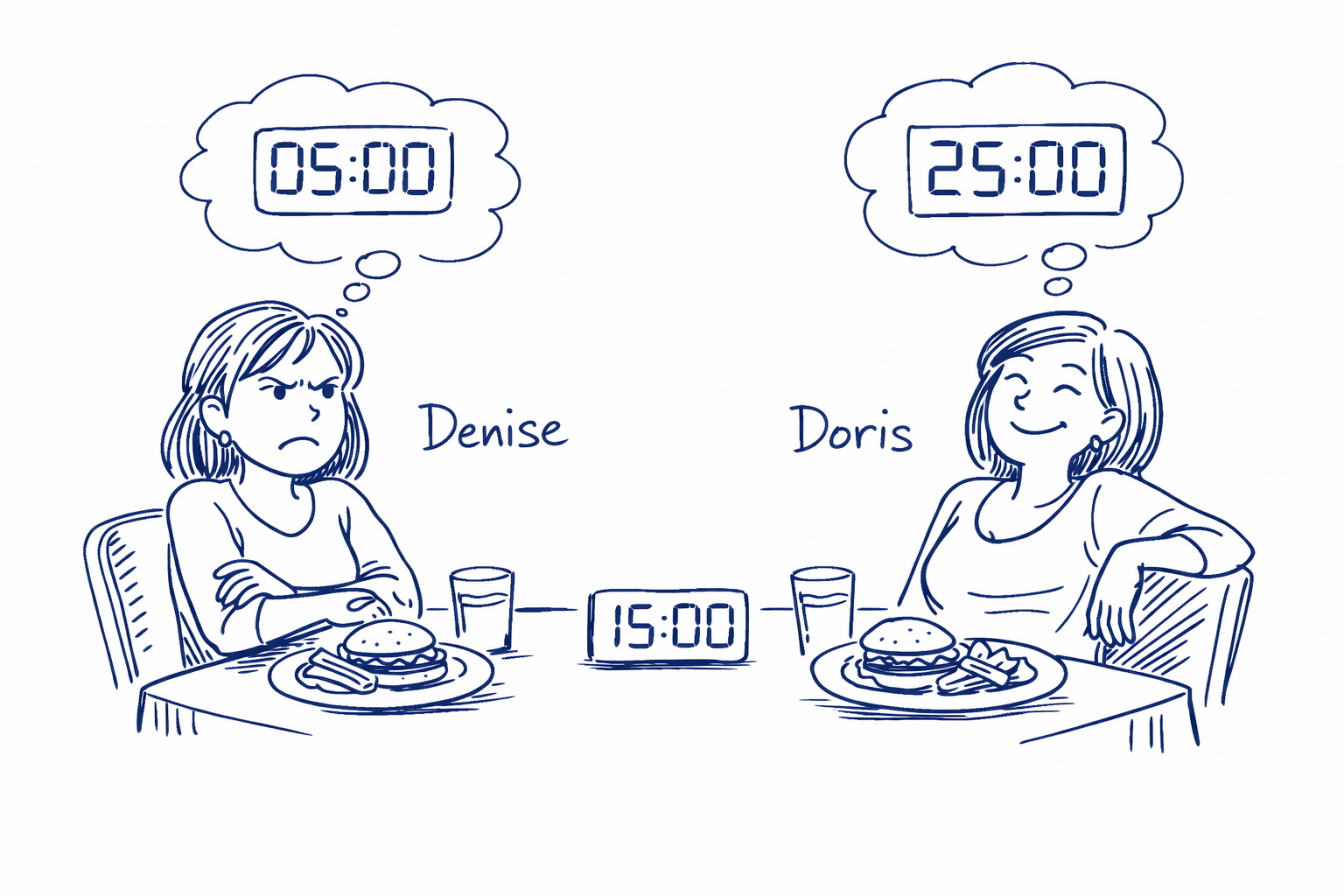
This is an important lesson about life. Many times, frustration does not come from what happened. Frustration comes from what we EXPECTED to happen.
Internal expectations are about how your brain predicts reality.
Your internal expectations shape your motivation, disappointment, confidence, and stress.
Two people can experience the same outcome and feel completely different, depending on the expectations they set beforehand.
Our expectations act like a picture in our minds. We imagine how something should go. We imagine how fast it should happen. We imagine how people should behave.
When reality does not match the picture we imagined, we feel stress.
That is why…. learning to manage our expectations is such an important life skill.
There are three common mistakes people make with their expectations.
The first mistake is expecting speed.
People expect progress to happen quickly. They expect to learn a skill fast. They expect a new job to feel easy right away. They expect a business idea to take off quickly. But most progress takes longer than we think. Skills take years to build. Trust takes time to grow…and big goals take steady persistence over a long period of time. When we expect things to happen fast, normal progress can sometimes feel like failure.
The second mistake people make is expecting smooth progress.
People imagine success like a straight line that moves up every day, but real life rarely works that way. Progress usually looks chaotic because we move forward…then we hit a setback. Then we learn something new, and then we move forward again. This is life. This is my life. Every successful person will tell you the messy middle is normal. Unfortunately, normal problems feel like signs that something is wrong when we expect the journey to be smooth.
The third mistake is expecting people to think like we do.
Oftentimes, we assume others should work the way we work. We assume they should communicate the way we communicate. We assume they should care about the same things we care about. But every person has a different background and a different set of priorities.
So, if those are the common mistakes, how can we manage our expectations better?
I have three helpful habits for you.
The first habit is to slow down and ask better questions. Before starting something, ask yourself... What does success look like? How long might this really take? And what problems might appear along the way? This helps you build a more realistic picture.
The second habit is to stretch your timeline. A helpful rule is this….Most meaningful things take two or three times longer than you first expect.
“Most people overestimate what they can do in one year and underestimate what they can do in ten years.”
When you plan with that in mind, you become more patient and less stressed.
The third habit is to expect challenges. Problems are part of the process, and they do not mean you are failing. Every project and relationship includes confusion, mistakes, and adjustments. That is how learning works.
There is so much more to talk about on this subject, but I’ll stop there.
See you in the next one!
-Lance
Strong employees = strong teams. Use my Team Builder Pro system.
