
Ernst Concrete - A "Force for Good" Team
Lessons from Nearly 80 Years of People-First Decisions

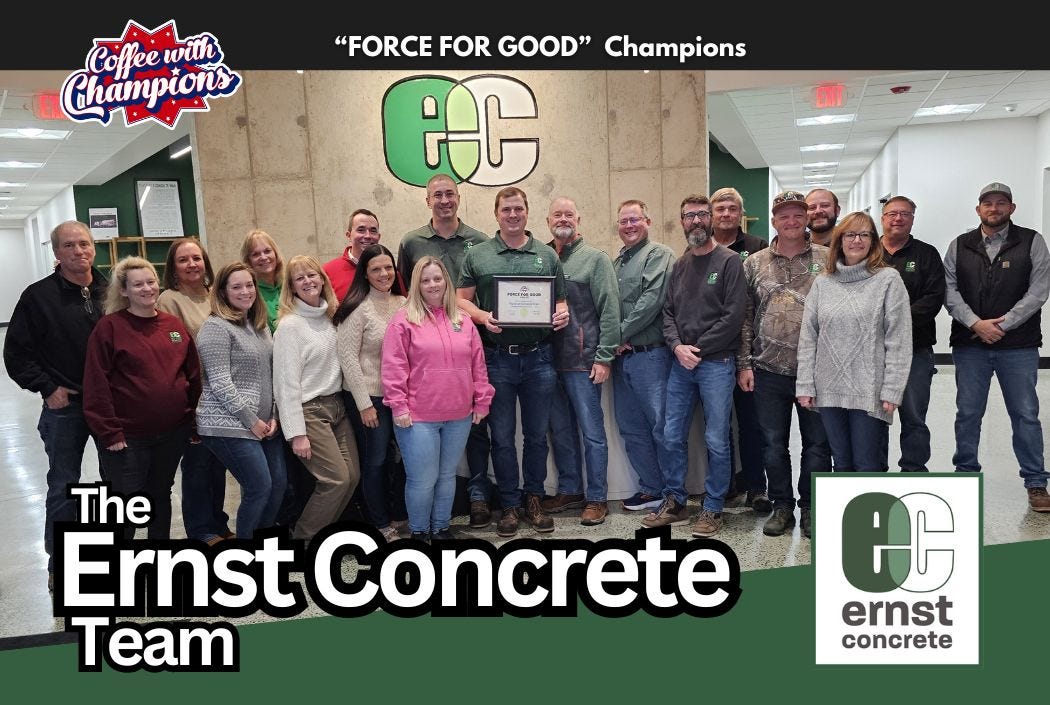
Every year, we talk with a lot of companies about culture. Most are genuinely trying to get it right. The challenge is translating good intentions into something that consistently shows up day to day. When we sat down with team members and leadership at Ernst Concrete, what stood out immediately was consistency. Different people, different roles, but the same themes.
Ernst Concrete is a fourth-generation, family-owned, 1000+ employee company that began in 1946. What started with aggregates grew into concrete operations across multiple locations and states, supported by a wide range of roles, including drivers, plant teams, dispatch, sales, safety, payroll, and leadership. The work is demanding, schedule-driven, and operationally complex. That context matters because the culture described in this room exists under real pressure, not in theory.
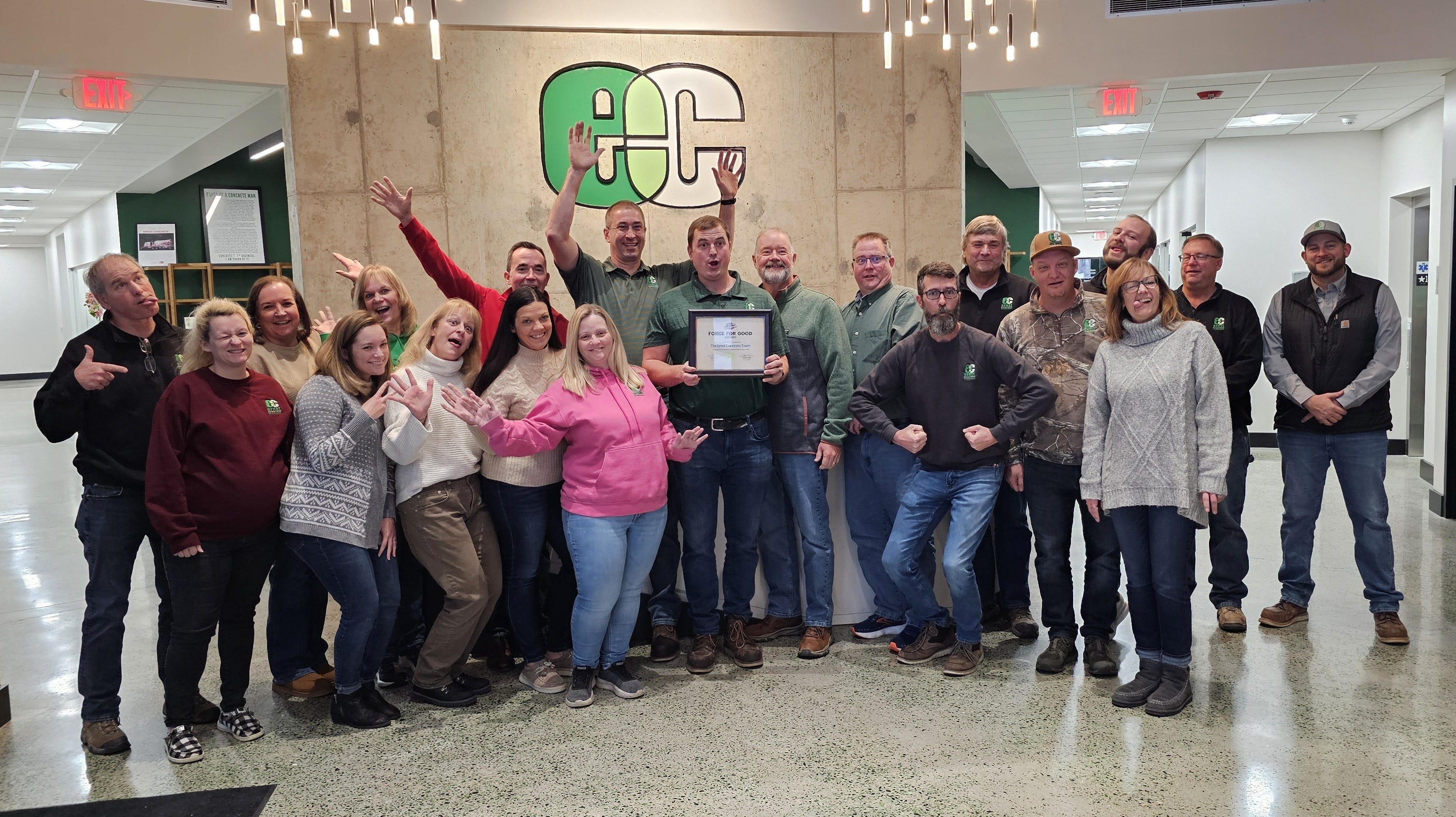
That consistency is why Ernst Concrete was nominated and recognized as our latest “Force for Good” team winner. Not because of a single program or initiative, but because of how people described being treated, how decisions get made, and how the company shows up when things are hard.
What We Learned Sitting in a Room at Ernst Concrete
Jessica and I didn’t walk into Ernst Concrete trying to extract best practices. We weren’t looking for a playbook. We were asking open questions and listening. What stood out wasn’t one big idea. It was how often the same themes came up from different people, in different roles, without any coordination.
Here are seven things we heard repeatedly as we sat with the team.
1. Leadership shows up in the work, not just the meetings
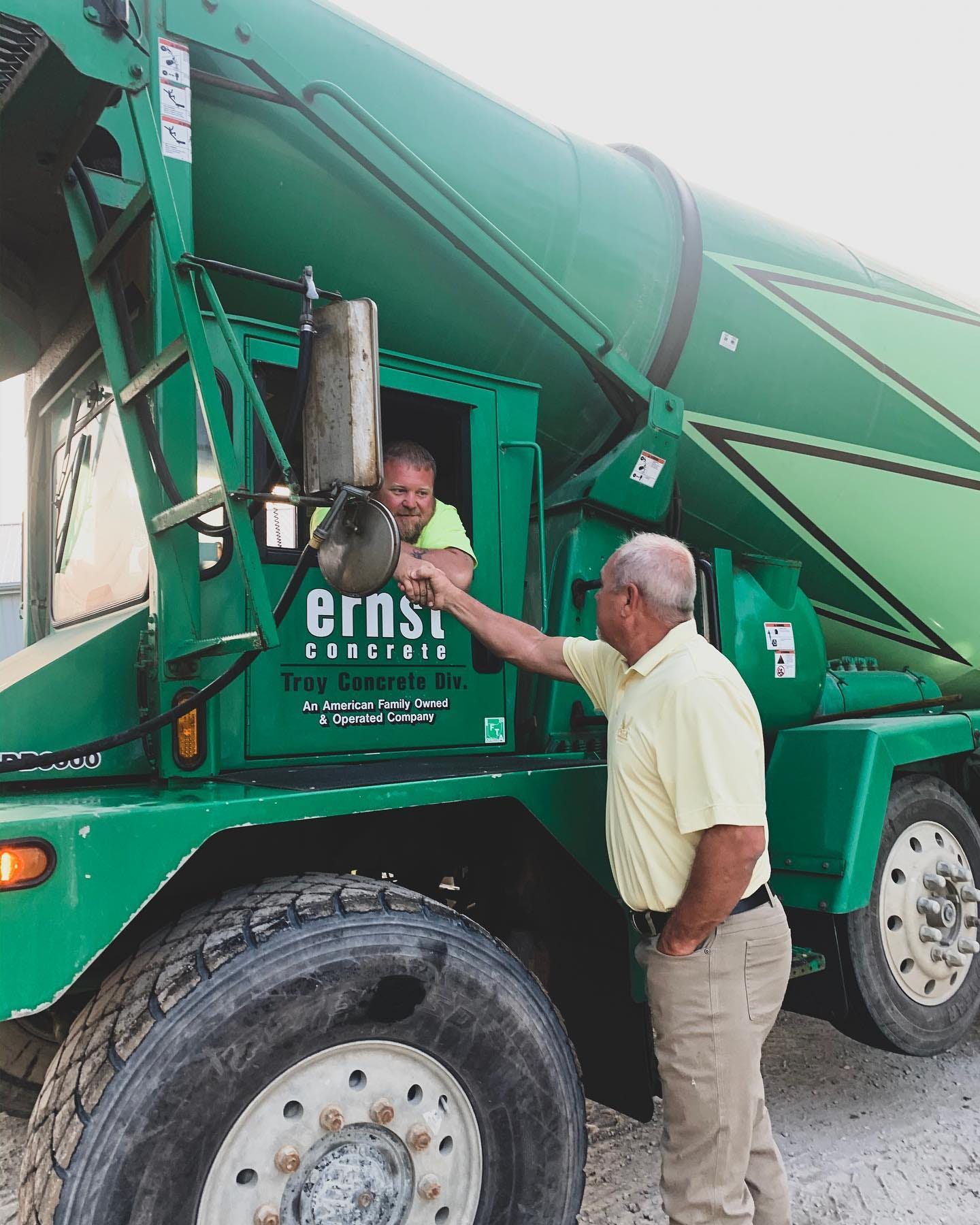
More than one person shared stories where leadership stepped into the middle of the job, especially when things were hard. Not to make a point. Just to help.
One team member described a high-pressure project this way:
“We were doing a pour that one of our competitors got kicked off of. We took it over and had 56 straight hours pouring a bridge deck, and so we’re trying to pull 2 shifts, and John and one of Collin’s brothers (owners of Ernst Concrete) came down, and they tested concrete and threw ice in the trucks and ran the loader and just did regular stuff. And if you didn’t know who they were, they were just another employee. But that’s the kind of attitude everyone has. There’s no ‘that’s not my job’. It’s you do what you have to do. Get the job done and everybody’s on the same level.”
Another person chimed in, “You’ll see them (Ernst owners) at 2:00 am in the morning at plants...even through the growth that they’ve gone through.”
Titles don’t matter to the leaders of Ernst. Over time, that kind of behavior quietly resets how people see hierarchy.
2. How Ernst handles growth without losing people
When Ernst buys another company and brings it into the organization, the employees at that company are often nervous. They wonder if their jobs are safe, if new leaders will change everything, or if they’ll still feel like they belong. Several people talked openly about how tense those moments can be.
One long-time employee said, “We go into plants, and they’re scared to death because they don’t know if they have a job or not.” What stood out was what came next. “And then you talk to those people a month later, like, ‘oh my God, that’s the best thing that happened to us.’”
Another person added, “It’s like you just adopted people and they just come into the family.”
3. Work is planned around people, not the other way around
Several people talked about how Ernst decides which jobs to take on and how those jobs affect real lives.
One long-time employee explained that at Ernst, decisions are not made by looking at dollars first. They start by asking how the work will impact the people doing it.
“They’ll never sacrifice their people for a certain job,” he said. “When we look at work to take on, the people part comes up first. They don’t look at what we’re going to get out of it financially. They look at what it means for our people.”
He went on to explain how different that felt compared to other companies he had worked for, where long hours were simply expected.
“At other places, 70, 75, 80 hours a week was just normal,” he said. “Here, if it’s going to be a nighttime job, the first question is, ‘What does this mean for our people?’”
When a job will change schedules or lifestyles for weeks or even months, leaders talk about it openly.
“If it’s going to change their lifestyle or schedule for three weeks, a month, maybe even six months, we tell them up front so they can adjust,” he said. “The more informed you get, the more respect you get back.”
He summed it up simply: “It’s people first. You don’t get that everywhere.”
4. Ernst prioritizes cultural fit, not just skill
Not every role requires the same hiring process, but when Ernst is deciding who to bring into the organization, cultural fit matters.
One newer team member shared an example of how that showed up during their interview experience.
“They took me out to eat,” he said. “They wanted to get me outside of that stiff, formal setting. The point wasn’t just to talk about the job. It was to get to know the person.”
He explained that the goal was mutual fit. “If you’re going to be working with someone that many hours a week, you want to make sure you can get along and that they’re a good person.”
What stood out to him was how intentional that felt. “Whether I got the job or not, that went a long way,” he said. “It showed they care about fit, not just skill. That’s a family-owned, family-oriented company.”
5. Asking for help is normal here because they give it.
Support wasn’t described as an exception. It was described as expected.
One employee proudly boasted, “If you ask for help, you can get it. I mean, there’s nothing here that you can’t ask for that they won’t bend over backwards for employees when it comes right down to it.”
Others shared stories of support during personal challenges, not just work ones.
6. Long-term thinking guides real decisions
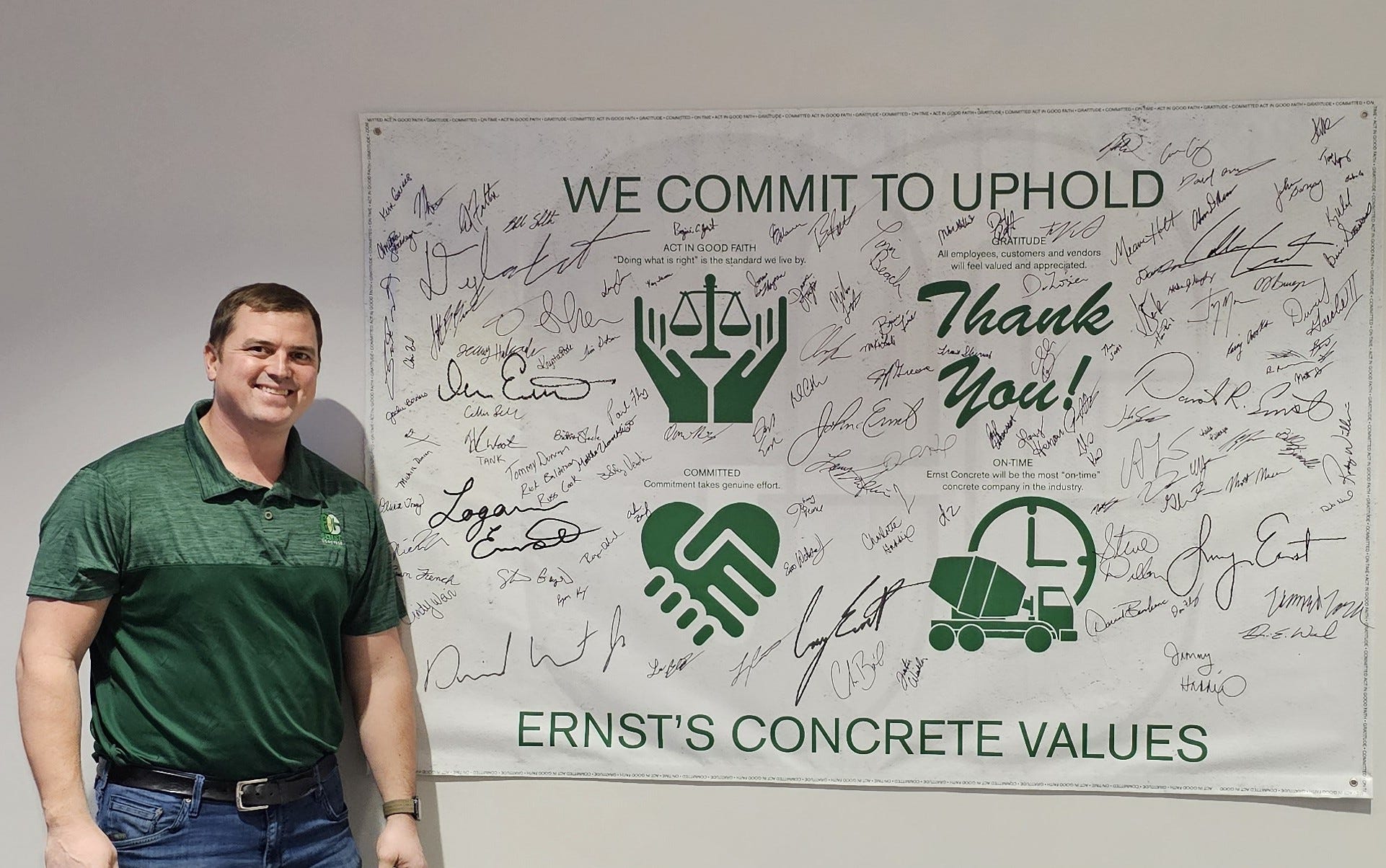
Collin Ernst, the 4th-generation Ernst leader, described a guiding mindset that shapes how decisions get made, summing up a recently adopted vision framework that said, “The company shall continue forever.”
He explained that this mindset shows up most clearly when leaders are forced to choose between short-term savings and long-term health. In a recent benefits meeting, the conversation wasn’t about cutting costs as aggressively as possible. It was about balance.
Rather than asking how much money could be saved, Collin asked a different question: what if we could stay even and still make the benefits better for our people?
That same long-term lens applies to customers and operations. Collin explained that Ernst is willing to make decisions that might not look smart on a quarterly spreadsheet if they make sense over time.
“We’re making decisions that might not make financial sense today,” he said, “because you’re going to reap the benefits for a long time. The ROI period is a lot longer than the next quarterly shareholder meeting.
“We’re gonna make the right decisions for our customers, our employees, and all of our stakeholders, that are long-term decisions. So having a long-term vision helps us.”
The idea is simple but rare: optimize for durability, not just immediacy. When leaders say the company should continue forever, they are committing to decisions that protect employees, customers, and the business for the long haul, not just the next quarter.
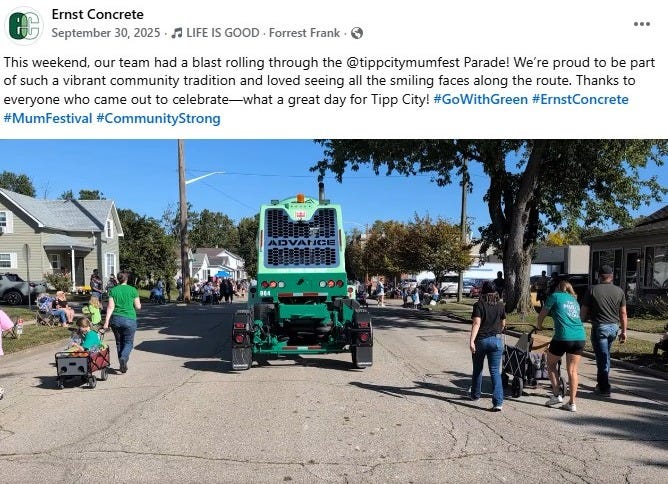
7. A visible commitment to the community
One of the most tangible ways Ernst’s long-term mindset shows up is out in the community, often in ways you can literally see.
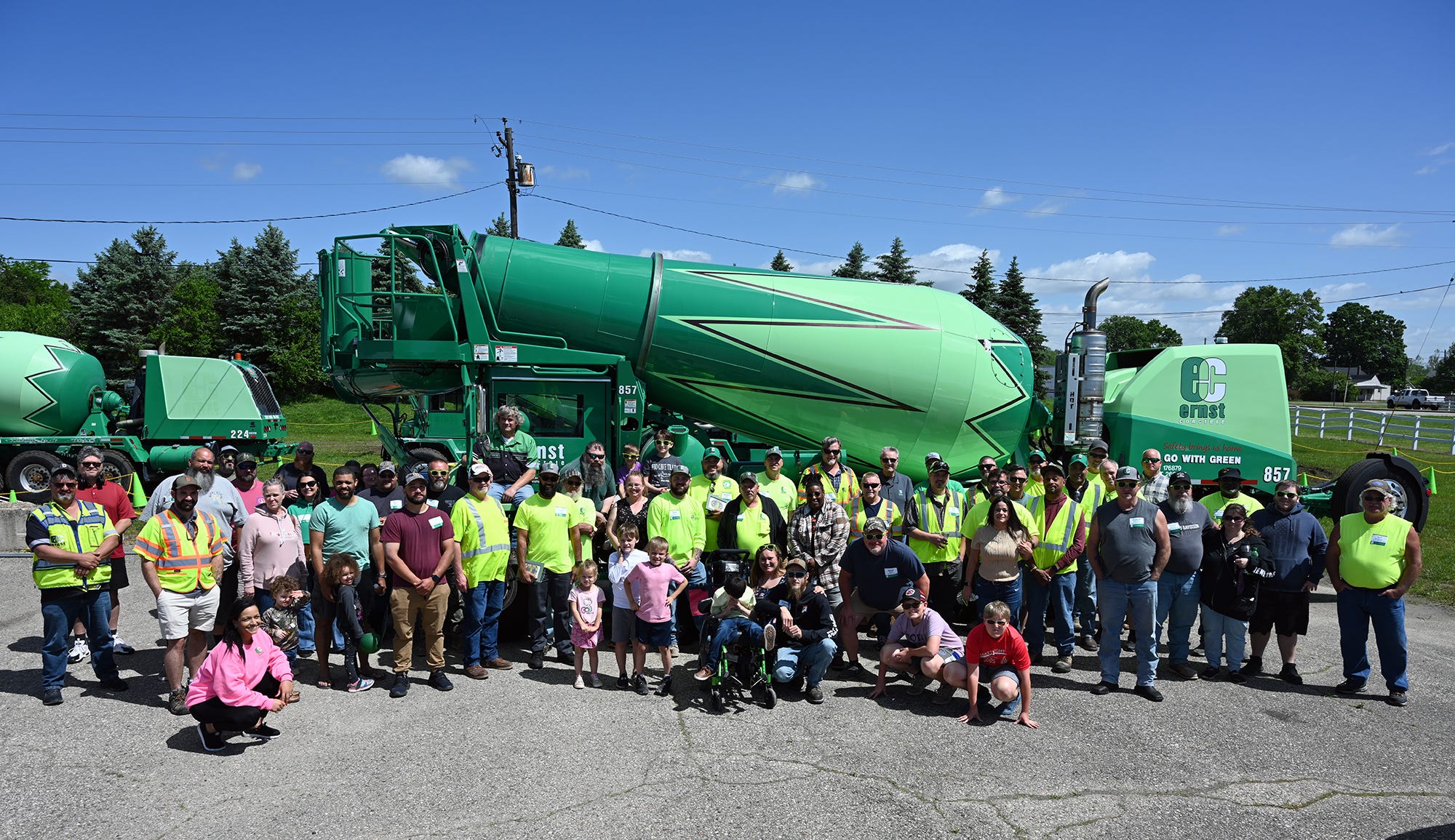
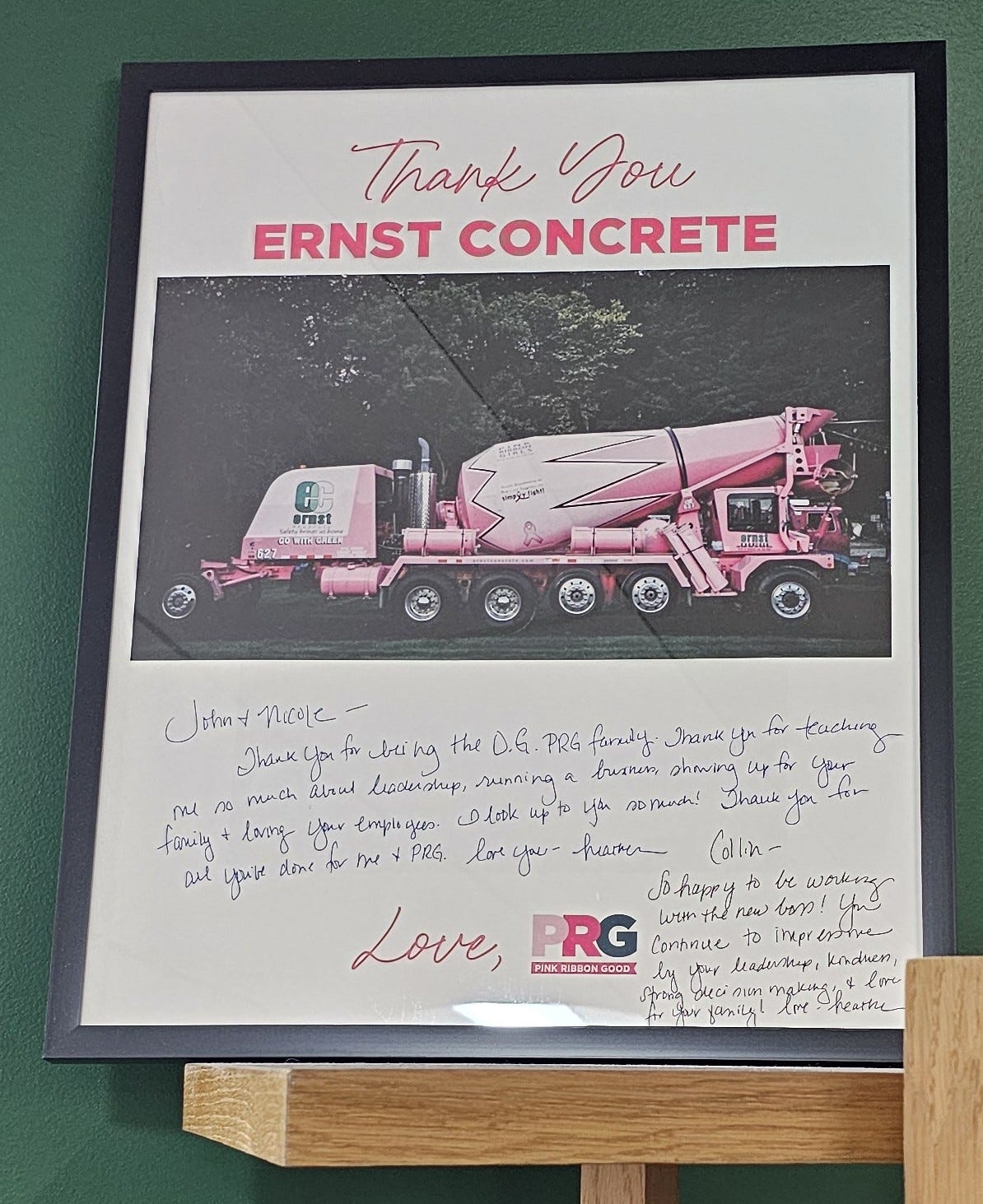
They have multi-colored concrete trucks that not only raise awareness for various causes, but they also raise money to support them. For every yard of concrete poured by one of their special trucks, they donate $1 to the cause it represents.
That visibility matters, but what stood out in the room was why Ernst does it.
One team member explained, “You have to understand, that’s where our employees live. You see the Ernst hats on the weekends. You see the culture spread outside of just this place.”
He shared that community involvement isn’t limited to one type of project. “Whether it’s helping with softball, baseball fields, or other local efforts, they never shy away from it.”


Where Coffee with Champions fits in
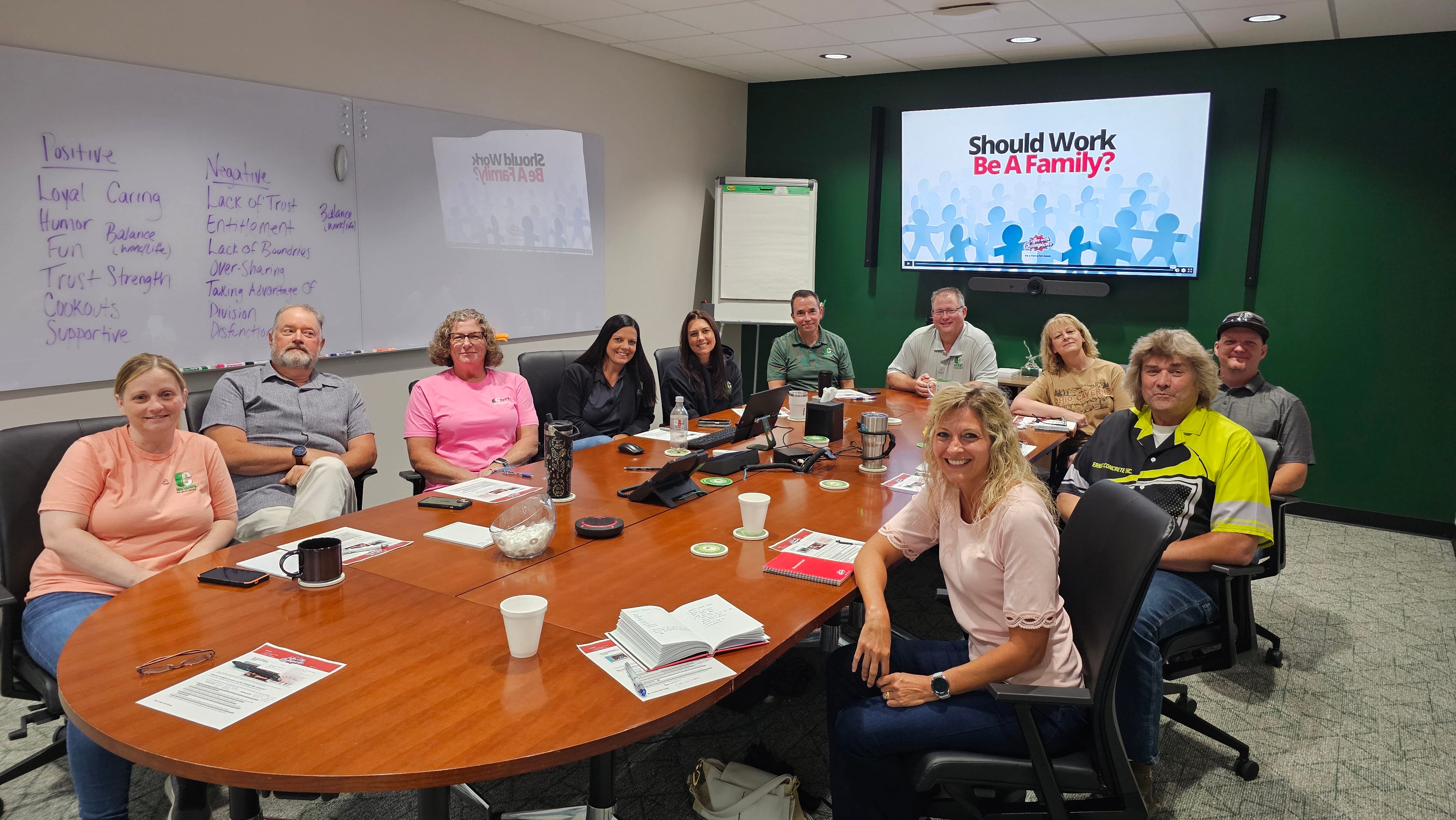
Near the end of the conversation, we asked the team what Coffee with Champions has added to their day-to-day work. The theme was consistent. It creates space to slow down, think differently, and understand each other better.
“I think it brings us closer in understanding each other,” one person shared.
Others emphasized the pause it creates. “Sometimes we’re so busy we don’t stop,” another said. “This makes us sit down, relax, and talk. It’s an enjoyable hour.”
Several people pointed to the questions themselves as the value. “The subjects and the questions are extremely thought-provoking,” one team member explained. “It gives you a chance to step back and look at yourself not just as an employee, but as a person.”
That approach has a practical impact. One leader described using Coffee with Champions outside the room to help a struggling team. “Instead of me telling them what to do, I brought the material and let them work through it together.”
Collin Ernst said, “The thought‑provoking questions and the topics just get open‑ended questions that bring people together, because we’re pretty siloed here. We’ve got payroll, sales, dispatch, safety, departments that wouldn’t really interact, but this gets everybody together cross‑functional.”
How can someone get in touch with Ernst Concrete?
Website: https://www.ernstconcrete.com
Headquarters: 993 Falls Creek Drive, Vandalia, OH 45377
937-233-5555
Closing
Being a Force for Good is about making a positive impact at your job, in your community, and in your family. There are many ways to live that out, and many different contexts where it shows up.
What we saw at Ernst Concrete is one clear example of what that can look like over time. Across four generations and nearly eight decades, the same priorities kept surfacing in conversation. People matter. Decisions are made with the long view in mind. Community involvement is tied directly to where employees live and where customers place their trust.
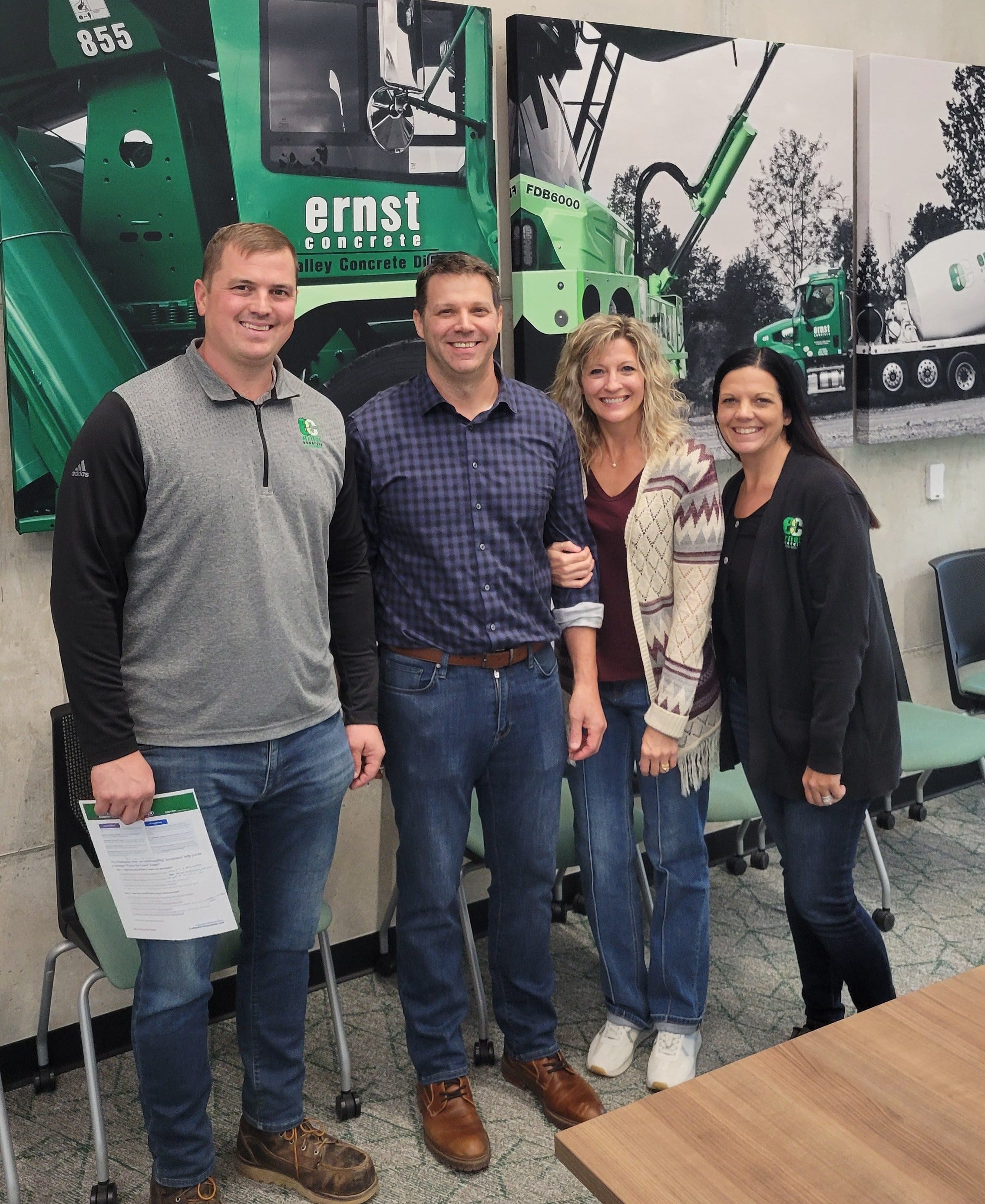
We appreciate the Ernst Concrete team for opening the door and allowing us to listen, ask questions, and see how those values are practiced day to day.
Thank you to everyone who took the time to speak candidly and share their experiences. We’re grateful for the opportunity to learn from you and to highlight the work you’ve been doing for a long time.
You all are a Force for Good!
-Lance Miller
Ernst Concrete uses the “Coffee with Champions” TEAM BUILDER PRO program. Learn more about it here. 👇
